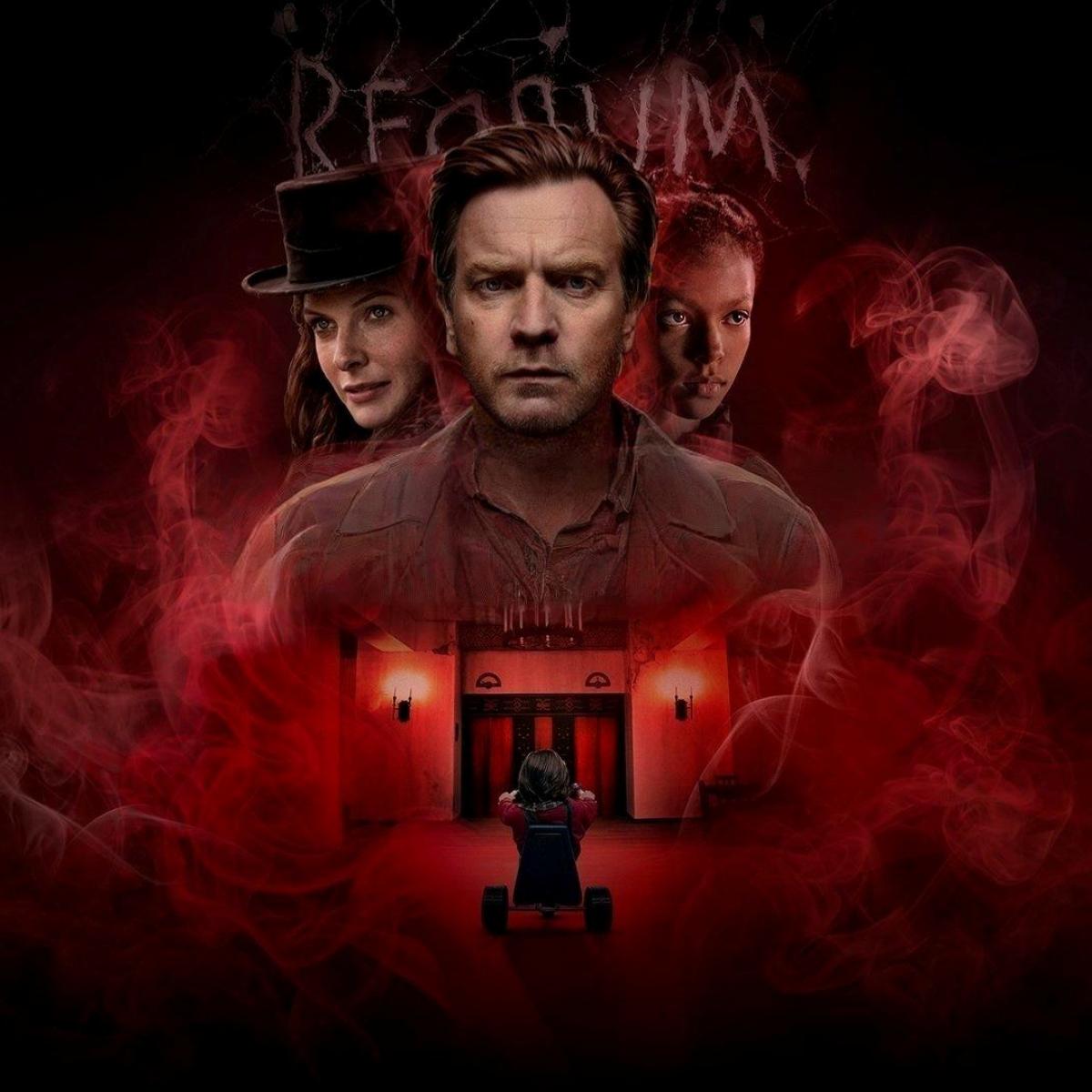
1997’s The Shining can be redrum to get through.
You’ve got to respect the fact that the main reason there is another version of The Shining at all is that Stephen King was such a messy, petty bitch about the 1980 version that he couldn’t let it lie. Seventeen years after Kubrick closed the doors on the Overlook hotel and sixteen years before King himself would write the sequel novel which would in turn allow Mike Flanagan to heal the rift and put all the ghosts to rest, King finally got his wish with The Shining TV miniseries, a 1997 adaptation so faithful it would be banished in the very first round table of The Traitors.
But fidelity can be a treacherous thing when it comes to bringing novels to life on the big or small screen and where Stanley Kubrick’s film warped the tale into a cold, aesthetic descent into madness, Mick Garris (who else?) traces the contours of King’s novel with dutiful precision.
You probably know the story – the Torrance family; Jack (Steven Weber), Wendy (Rebecca De Mornay) and Danny (Courtland Mead) arrive at the Overlook Hotel where Jack has secured seasonal employment as the winter caretaker after his temper and alcoholism combined to ruin his teaching career. But Danny has a gift, a psychic ‘shine’ that awakens a hunger in the psychically and psychotically charged corridors of the Overlook.
Garris’ Shining is haunted by the book at every turn, made with a reverence bordering on paralysis. Every haunted corridor, ghostly bartender, and boiler-room warning is here, yet the resulting chill feels oddly tepid, as though the Overlook Hotel has been scrubbed clean of its menace for primetime viewing and Garris’s journeyman directorial talents. Much of the adaptation’s problems, though, stem from the problem that Stephen king the screenwriter is far too enamoured of Stephen King the author’s novel and simply cannot – or will not – bring himself to make even the smallest concessions to the change of medium.
King’s hand is everywhere, not just in the teleplay. The insistence on shooting it at The Stanley Hotel, the real-life inspiration for the Overlook, for example may scratch that authorial itch but it isn’t shot to seem sinister, or even a little foreboding, looking more like somewhere Hercule Poirot or Miss Marple might step out of to take the air than the setting for a paranormal power play.
The miniseries format does at least give Garris and King the space to include scenes the film omitted; the topiary animals, the wasp’s nest even more time with Danny’s psychic playmate Tony but events on the page don’t always translate to the screen in the same way and what sizzled in the prose congeals on screen, especially when it relies on special effects the medium and budget cannot do justice to. Garris’ direction, efficient and earnest, can’t compete with Kubrick’s icy precision, nor does it attempt to and he embraces the Overlook as a straightforward ghost story, where the supernatural manifests as menace rather than malaise.
Steven Weber’s take on Jack Torrance, is through and through and unsurprisingly the man from King’s novel. Jack is a tragic figure; intelligent, insecure, and fatally vulnerable to the temptations and manipulations of the Overlook. Weber leans into the character’s humanity, a sharp contrast to Nicholson’s madman-in-waiting although obviously nowhere near as potent. Rebecca De Mornay’s Wendy, too, benefits from the adaptation’s commitment to the source material; she’s no longer the trembling waif of Shelley Duvall’s portrayal, but a woman with backbone and agency. Both are decent enough given the material they have to work with – King as a screenwriter has rarely been economical with his dialogue – and Courtland Mead is mostly serviceable as precognitive moppet Danny Torrance in a role that’s a tough ask for any child actor, or at least one that doesn’t have the benefit of a master director to guide him. Elliott Gould is a spectacular miscast as the odious Stuart Ullman, though, and almost throws the whole thing off within the first ten minutes.
King’s thematic preoccupations: addiction, redemption, and the corrosive effect of generational trauma surface more clearly here than they ever could under Kubrick’s watch, mainly because there’s little in the way of stylistic or abstract distraction. But that thematic coherence comes at a price: it’s rarely frightening. The problem isn’t that The Shining miniseries misunderstands horror; it’s that it has nothing to surprise you with, especially if you’ve read the novel it’s so doggedly based on. Art that doesn’t surprise is art that doesn’t entertain. It’s what fanboys who demand complete fidelity to canon and source material fail to understand and why any attempt to developed bespoke, algorithmically perfect entertainment is doomed to failure. Subverting, exceeding, falling short of expectations – they all have value. King’s perfect version of The Shining is inert.
Fans of the novel and King himself defend this adaptation as the “true” Shining, and they’re not wrong: it is, textually. But the strange alchemy that turns a ghost story into an enduring cultural myth lies not in transcription, but in translation. King wrote about a haunted man in a haunted hotel; Kubrick filmed the haunting of cinema itself. I love King’s novel, and I love Kubrick’s film and I kind of love that they’re almost entirely two different things – I get more of The Shining for my money, variations on a theme. Garris, first and foremost a vassal director whose fealty is to his King, copies out the manuscript without even historiating the first letter of each page. Faithful to a fault, it may burn the Overlook to the ground, but generates very little heat.